
The stopwatch and the heart-rate monitor haven’t gone away. They still tell a coach or a clinician plenty about pace and cardiovascular load. What they’ve never been able to do is show how someone moved to produce that time or that heart rate, and that is the gap modern inertial sensing closes.
Across sport science, biomechanics labs and rehab clinics, whether that’s a national training center or an independent researcher working with a handful of weekend athletes, performance is being described less by how far or how fast someone went, and more by how their body actually moved to get there. Wearable motion sensors paired with edge AI now measure that without a lab. The same real-time, on-device intelligence is also what keeps a standalone Virtual Reality headset from making its wearer sick. Same core technology, two very different payoffs.
This article makes the case for professional-grade wearables for settings in which human motion analytics are key. It also shows why the same on-device intelligence that keeps a standalone VR headset from making its wearer sick is really the same story: capturing and interpreting human movement accurately, on the edge, in real time.
Accelerometers Aren’t New. This Job Is.
A wearable IMU is, at its core, the same accelerometer-and-gyroscope pairing found in a smartphone, just calibrated, sampled thousands of times a second, and worn directly on the body. Your phone uses that pairing to know whether it’s face-up on a table. A body-worn sensor uses it to know how a knee is tracking on landing, or how a lifter’s bar is drifting off-line halfway through a set.
Sensor fusion is what turns that raw acceleration and rotation data into something useful: joint angles, movement asymmetry, and event detection, foot strike, takeoff, peak deceleration, computed on the device itself, in microseconds. Magnetometers, where included, can help with heading, but they’re less reliable in magnetically noisy environments. On its own, the raw signal is noisy and drifts. The fusion is where the value is really created.
Sensor Fusion: The Motion Processing Engine Beneath Everything
Every claim in this article, joint angles precise enough to catch an ACL risk pattern, an on-device model that predicts motion sickness before it happens, rests on one layer working correctly first. Raw sensor data is fast but messy: noisy, drifting, and contradictory on its own. 221e’s MPE™ Motion Processing Engine is what turns that raw stream into a clean, reliable estimate of orientation and movement, continuously, in real time, before any edge AI processes that data.
This is the foundational layer, not a feature bolted on afterward. Get it wrong, or skip it, and every layer built on top, injury-risk detection, activity recognition, motion-sickness prediction, inherits the error. Get it right, and it’s what makes accurate, real-time edge AI possible at all.
Built on Context-Specific Data for Edge Cases
Most commercial motion-tracking wearables run generic ML models trained on broad, average-case datasets. That works for general fitness tracking. It breaks down exactly where the stakes are highest: a sprinter’s asymmetric ground contact, a surgeon’s tremor pattern, a midfielder’s fatigue-driven load asymmetry late in a match.
This is the gap 221e’s NeuraActive™ Activity Recognition and Tracking is built to close. Instead of training on broad, average-case data, it uses physics-informed, expert-in-the-loop models built from domain-specific, biomechanically grounded data and that trade pays off twice. Smaller, high-quality datasets generalize better to the population they’re built for, and the resulting models are light enough to run locally on the sensor itself. They can recognize fatigue, asymmetry, or injury-risk patterns as they happen, without offloading to a phone or a server.
Sport Performance: Seeing What Speed Alone Can’t
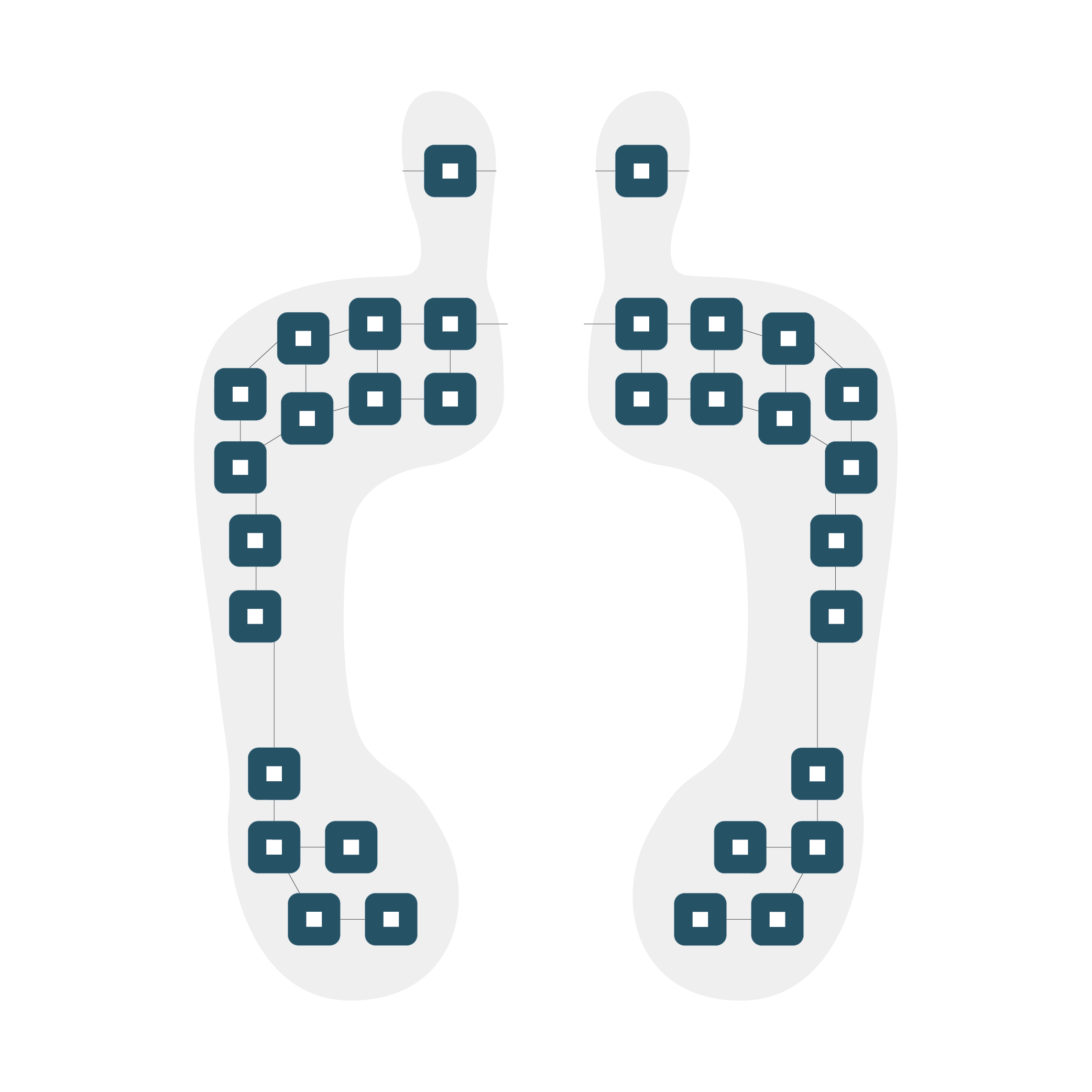
Knowing an athlete covered ten kilometers says nothing about how each stride landed. Paired IMUs on the shin and thigh can pick out the knee bending, rotation, and inward-collapse patterns tied to ACL injury risk during landing and cutting; a single sensor on the lower shin, just above the ankle, captures the impact shock linked to stress-fracture risk; and a sensor near the ankle can flag the altered push-off stiffness associated with Achilles tendinopathy. None of that shows up in speed and distance alone.
The same setup runs just as well outside a national team facility. A university biomechanics lab, a physical therapy clinic, or an independent researcher working with local club athletes uses the identical pipeline. The same sensing extends into the weight room, too. Bar velocity, time under tension and set-to-set mechanical fatigue give objective feedback that a coach’s eye can’t always catch, especially in Olympic lifting, where a few centimeters of bar drift decides the outcome. Ground contact asymmetry, leg stiffness, jump reactive strength, trunk rotation, gait variability: put together, this is what “how did he run, and at what cost” really looks like as data.
After the Appointment Ends, Outside the Clinic Walls
The same problem shows up anywhere movement needs to be tracked outside a lab. In rehab, a Timed Up and Go or 10-metre walk test gives a clinician a thirty-second snapshot. However, recovery from a stroke, an ACL reconstruction, or a hip replacement unfolds over thousands of movement cycles a day, most of them nowhere near a clinic. Continuous inertial monitoring catches the real gait pattern instead of the coached version, flags compensatory movement before it becomes habit, and can pick up freezing-of-gait episodes or degrading balance long before they’d surface in a weekly appointment.
In industrial settings the stakes shift from recovery to safety. A single lumbar or wrist sensor can track cumulative spinal load across an eight-hour shift and flag repetitive-strain risk, and on a firefighter or construction worker, the same node can double as man-down detection, fall detection and fatigue monitoring, all from one piece of hardware.
Standalone VR’s Motion Sickness Problem, Solved On the Device
Cut the cables and a headset has to do its own motion sensing without a PC’s processing power to fall back on. The margin for error is thin: as many as two out of three Virtual Reality users report some motion sickness, and roughly a quarter feel it within the first fifteen minutes. That’s a direct threat to the completion and retention numbers that made standalone hardware attractive to enterprise training, education and healthcare programs in the first place.
Motion sickness comes from a mismatch between what the eyes see and what the body feels. Once the delay between a movement and the headset’s response drops below roughly 20 milliseconds, the brain stops noticing that mismatch, and sickness drops off sharply. A round trip to the cloud is already past that window before it starts, which is why this must be solved on the device. It’s the same sensor fusion and edge AI used to catch the earliest symptoms of a patient’s movement disorder, here catching the earliest signs of discomfort and correcting the experience before the user consciously feels sick. It runs invisibly in the background. The user just notices the headset feels comfortable and keeps using it.
The same motion processing engine also drives hand and controller tracking. Gesture recognition runs on an identical latency budget: a hand reaching for a virtual object needs its position and orientation resolved with the same low drift and sub-20-millisecond responsiveness, or the gesture feels laggy and the sense of presence breaks. It’s the sensor fusion layer doing double duty, keeping the user’s stomach settled and their hands responsive at the same time.
Frequently Asked Questions
What’s the difference between a fitness tracker and a professional motion sensor?
A fitness tracker gives you steps and sleep insights from sensors running closed algorithms. A professional system uses calibrated sensors and validated fusion to output real biomechanical numbers, joint angles, symmetry, event timing, the kind of detail a coach or clinician can act on.
How many sensor nodes do you need to capture full-body movement?
It depends on the application. A single lumbar-mounted node is enough for gait analysis, fall detection, and spinal load monitoring. Full-body capture or side-to-side comparisons need 6 to 17 nodes, depending on how many body segments are being tracked.
Can IMUs replace optical motion capture?
For most real-world use, sport, rehab, industrial, largely yes, especially where portability matters more than lab-grade precision. Research-grade optical systems still hold the edge for sub-millimeter marker accuracy in controlled lab settings; how close IMUs get depends on sensor placement, calibration, and the fusion algorithm.
What does “sensor fusion” actually mean?
It means combining data from the accelerometer, gyroscope, and sometimes magnetometer (each of which can prove to be individually noisy or wrong in their own ways), into a single estimate that’s more comprehensive and accurate than any one sensor alone.
How is edge AI different from just running an algorithm on the sensor?
A basic on-sensor algorithm applies fixed rules, filter this, flag that threshold. Our edge AI is a trained model running on the sensor itself, so it can recognize things like fatigue or movement quality, not just calculate a number.
Conclusion
None of these outcomes, be it a coach catching an ACL risk pattern before it becomes an injury, a physical therapist watching a patient’s real gait between appointments, or a VR user finishing a training module without retching into a trash can, come from a bigger dataset or a faster network connection. They come from putting the sensing, the fusion, and the AI on the body and on the device, where the movement physically happens. That’s the bet behind this technology, and it’s already paying off in gyms, clinics, warehouses and headsets that no longer have a cable to hide the problem behind.