
For outdoor sports people, falls are a defining safety risk. The challenge is always the same: if you go down and cannot call for help, the window for effective medical response closes quickly. The problem is not unique to sport; it affects lone industrial workers and vulnerable adults just as acutely. But for athletes, the combination of high speed, remote locations and physical intensity makes it especially consequential. This article explains how edge AI for fall detection is changing that equation, why old approaches keep failing outdoor users specifically, and what makes fall detection powered by 221e’s edge AI reliable in real-world conditions, including in demanding outdoor sports environments.
When Every Second Counts
When someone collapses and cannot call for help, the clock starts immediately. A response within five minutes can be the difference between a full recovery and permanent disability, or worse. That is well documented across emergency medicine research. For outdoor sports people, the stakes are high: a mountain biker going down on a remote trail, a trail runner collapsing mid-race or a solo skier caught in an off-piste fall may be completely out of sight and unreachable for minutes or hours.
Many fall detection systems have historically been slow, unreliable, or both. They either missed real falls or flooded caregivers with false alarms. Workers stopped wearing the devices. Athletes stripped them off before heading out. That trust problem is the real enemy. A fall detection system that people do not trust, or simply refuse to wear, protects no one, regardless of how sophisticated it looks on a spec sheet.
The Case for Processing at the Edge
Most fall detection systems used to work like this: the device sensed motion, sent data to a cloud server, the server processed it, made a decision and sent an alert back. That works fine when nothing is urgent. When it comes to fall detection, every link in that chain is a liability.
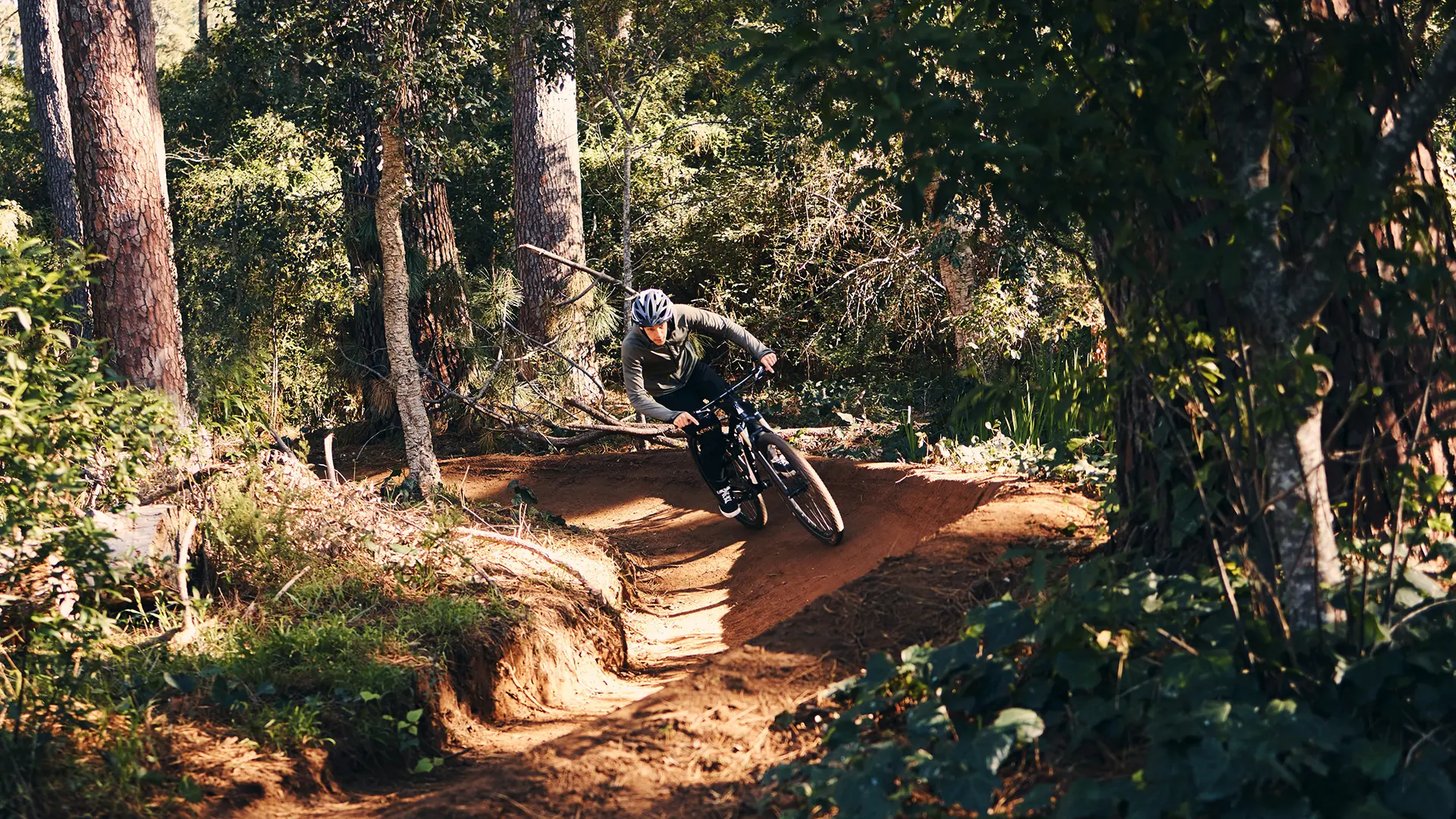
Picture a mountain biker mid-descent, ducking under a fallen tree trunk on a steep decline. The movement is fast, low, and abrupt: exactly the kind of motion a basic detection system would flag as a potential fall. Now picture that same rider catching a root at the bottom of that drop and going over the bars. The system needs to know the difference between the two, instantly, with no server, no signal, and no cloud. That is the problem edge AI solves. The algorithm runs directly on the Detection, analysis, and alert generation all happen locally, in milliseconds. In a mountain valley, in a forested descent, above the tree line, connectivity is gone, and a cloud-dependent system fails silently. An edge-based system keeps running regardless.
Real-time fall detection is only genuinely real-time when the entire decision process happens on the device. That is exactly what edge AI for fall detection enables. It is the architectural foundation behind solutions like the NeuraSafeTM Fall Detection, which runs its full detection pipeline on-chip with no cloud dependency.
Why Sensor Fusion Is the Foundation
A single accelerometer is not sufficient to reliably detect falls. It measures linear acceleration, meaning sudden movement, but it cannot distinguish a fall from a jump, or a hard landing after a bike drop. For outdoor sports people whose normal activity involves constant high-G events, this limitation is immediately disqualifying.
A gyroscope adds angular rotation data, tracking how the body is turning or tilting. Better, but still incomplete on its own. Purpose-built fall detection systems combine both sensor streams through sensor fusion. The algorithm merges linear acceleration and angular velocity into a single clean representation of body movement. Before any fall detection logic runs, raw noisy sensor data is filtered, calibrated, and fused into a form the algorithm can reason about clearly.
This is the step most legacy systems have skipped. They applied a simple threshold: if the acceleration spike exceeds a certain value, fire an alarm. That catches some falls, but also catches hard footsteps, sudden sitting, bike impacts and dozens of other non-fall events. Sensor fusion eliminates most of those false triggers before detection even begins. For athletes whose training movements regularly approach the intensity of real falls, this distinction is everything.
The Three-Phase Evaluation That Kills False Alarms
Even with sensor fusion, a single detection step is not enough. The most reliable AI fall detection systems use a multi-phase evaluation after a potential fall is identified. NeuraSafe implements this as three named phases: Alpha, Bravo and Charlie.
Alpha: Initial Detection
The system detects motion matching fall characteristics and intensifies monitoring. No alarm fires yet. This phase acts as a filter, catching fall-like events without committing to an alert.
Bravo: Post-Event Analysis
The algorithm monitors what happens in the seconds immediately after the event. Is the wearer moving normally? Are they recovering posture? If yes, the event is likely a stumble or a controlled bail (common in mountain biking or skiing), and the system quietly resets. If the wearer remains motionless, the process escalates.
Charlie: Alert Confirmed
Only if the wearer is still unresponsive does the alert fire and reach emergency contacts or services. This staged approach is why NeuraSafe, which is built on solid edge AI, achieves near-zero false alarm rates. It is not about being less sensitive to real falls; it is about understanding context. What happens after impact is often more revealing than the impact itself.
Why This Matters Specifically for Outdoor Sports
Of all the environments where fall detection must perform, outdoor sport is among the most demanding. Variable terrain, high physical output and frequent deliberate bails create a detection problem that controlled lab testing simply cannot replicate.
These athletes share a common profile: constant high-G sensor readings, distance from emergency services and a tendency to go out alone. A false alarm erodes confidence in the device until the athlete removes it. A missed detection can mean lying unconscious on a remote trail for hours.
Outdoor sports are a primary use case for this architecture, not a secondary one. The same sensor fusion and edge processing that protects a lone worker in a factory also applies to athletes in the field, but only if the training data reflects real outdoor environments. Controlled lab falls do not capture the dynamics of a mountain bike crash, a ski wipeout at speed, or a trail runner tripping on technical terrain. Systems validated only under controlled conditions will underperform in the field. The algorithm must handle the full physical diversity of outdoor sport.
The Current Situation
Outdoor sports represent one of the most underserved markets for fall detection technology. The demand is clear: athletes are operating in exactly the environments where detection matters most and where available consumer tools fall shortest. A mountain biker riding alone on a backcountry trail, a gravel cyclist on an exposed ridge route, a trail runner in a gorge with no mobile signal: these are not edge cases. They are the normal conditions of the sport.
What is changing is product expectation. Athletes and the brands building gear for them are starting to apply the same questions that industrial safety teams have been asking for years: does the device work without a signal? Does the algorithm understand sport-specific movement? Will it generate false alarms during a hard effort? The answers to those questions determine whether a safety feature gets used or gets switched off after the first ride.
The form factors are also shifting. Fall detection is no longer confined to a wrist-worn device. Helmets, vests, hydration packs and bike-integrated units are all viable platforms for embedded edge AI. As the hardware becomes smaller and more power-efficient, the sport-specific deployment options multiply, and with them the opportunity to build safety solutions that athletes will actually wear.
Impact Detection: The Same Sensors, a Different Event
Fall detection and impact detection are related but distinct capabilities. A fall is defined by what happens after the event: the person goes down and does not get up. An impact is defined by the event itself: a high-force collision that may or may not result in a fall. In outdoor sports, both matter equally and both can occur independently.
Consider a cyclist who clips a pothole at speed. The front wheel jolts violently, the handlebar snaps sideways and the rider’s helmet strikes a low-hanging branch before they regain control and keep riding. No fall. No loss of consciousness. But the helmet absorbed a significant force, and the rider may not fully register what happened until minutes later. A fall detection system would register nothing, because the person never went down. An impact detection system identifies the force event, flags it and prompts a check-in. That distinction can matter as much as detecting the fall itself.
The same accelerometer and gyroscope hardware used for fall detection can identify impact events, but with a different algorithmic signature. Where fall detection looks for a rapid deceleration followed by sustained inactivity, impact detection looks for a force profile above a meaningful threshold combined with orientation data that identifies where on the body or equipment the force was absorbed. In a helmet-mounted sensor, this means the system can differentiate a head strike from routine trail vibration.
For outdoor sports product designers, the practical implication is that fall and impact detection can run in parallel on the same embedded hardware without significant additional power cost. A single wearable can cover both scenarios: the rider who crashes and cannot get up, and the rider who takes a hard hit and keeps riding but should be checked for concussion. That dual capability is increasingly what personal protective equipment and other wearables for cycling, skiing and trail sports are expected to provide.
What Separates Good Systems from Bad Ones
Power consumption is the first test. Outdoor sport demands all-day operation across rides, runs and tours that rarely end on schedule. Well-designed fall detection edge AI meets that requirement by keeping all processing on-chip rather than transmitting data wirelessly, sustaining continuous monitoring without draining a small wearable battery.
Positioning variability is the second test. A wrist-worn sensor captures arm swing, grip forces and wrist rotation rather than core body dynamics, which makes it harder to cleanly distinguish a fall from normal athletic movement. A sensor on a vest or helmet reads an entirely different motion signature for the same event. Athletes do not position sensors perfectly and equipment shifts during activity. The algorithm must compensate for placement variability automatically.
Activity diversity is the third test. A system for mountain bikers must handle sustained high-cadence pedaling, trail impacts, sudden stops and genuine crashes, without false alarms on the first three while still catching the last. That requires training data from real operational environments, not simplified lab falls.
Conclusion
Fall detection sounds straightforward. It is not. A system that works in a lab and a system that works reliably on a remote mountain trail, an alpine ski run, or a gravel road at 40 km/h are not the same thing. The gap comes down to architecture: edge versus cloud, sensor fusion versus single-sensor thresholds and multi-phase evaluation versus simple impact detection.
The outdoor sports market demands the same architectural standards that industrial safety has been pushing toward. Solutions like NeuraSafe are designed to run fully on-device with near-zero false alarms across the physical diversity of real-world movement.
If you are building a safety product for outdoor sports and fall detection is part of the spec, get the architecture right before you build around it. A detection engine that fails in real conditions doesn’t simply “miss a fall”: it ends someone’s trust in the entire device. Test against actual use cases, actual environments and actual users. That is the only standard that matters.
Frequently Asked Questions
Q1. How is edge AI fall detection different from what sports smartwatches already do?
Smartwatches do include accelerometers and gyroscopes, and some models offer basic fall detection. The difference is focus. On a smartwatch, fall detection is one feature among many running on a general-purpose device. Dedicated fall detection edge AI is purpose-built: the algorithm is the primary job, tuned for the full range of sport movement, and embedded where it makes sense for the activity (a helmet, a vest or a bike unit) rather than only on a wrist.
Q2. What is the difference between fall detection and impact detection?
Fall detection identifies when someone has gone down and is unresponsive. Impact detection identifies a high-force event regardless of whether the person falls. Both use the same accelerometer and gyroscope hardware, but with different algorithmic signatures. In outdoor sports, a rider can absorb a significant impact (a hard landing, a handlebar strike or a helmet collision with a tree) and stay upright. Fall detection misses that entirely. Impact detection catches it and prompts a check-in. The two capabilities complement each other and can run in parallel on the same embedded hardware.
Q3. Does edge-based fall detection work without mobile signal in the mountains?
Yes. The full detection pipeline runs on the device itself, with sensor fusion, fall classification and alert generation all happening locally. Local alarms such as audio or vibration fire immediately. Remote alerts queue and transmit when connectivity returns. This offline capability is not optional for outdoor sports; it is the baseline requirement.
Q4. Why do older fall detection systems generate so many false alarms during sport?
They rely on single-sensor impact thresholds: if acceleration exceeds a fixed value, the alarm fires. For outdoor athletes whose normal activity constantly produces high-G events such as hard landings, trail impacts and sudden braking, this approach is practically unusable. Dedicated fall detection AI uses sensor fusion and post-event analysis to understand context, dramatically reducing false alarms without sacrificing sensitivity to genuine emergencies.
Q5. Which outdoor sports benefit most from this technology?
Any solo or semi-solo activity in a remote environment is high priority: mountain biking, trail running, ski touring, gravel cycling and hiking. E-bike riders are another growing category, particularly over challenging terrain. The common thread is distance from emergency services combined with genuine fall risk.
Q6. How long does the battery last with continuous fall detection running?
Well-optimized edge AI systems sustain continuous monitoring on a compact wearable battery because all processing stays on-chip, with no data transmitted continuously over wireless. In well-designed implementations, battery life does not become a limiting factor across a full day or multi-day outdoor activity.
Q7. Can one algorithm handle both senior care and outdoor sports use cases?
The core architecture can be shared, but sensitivity parameters must be tuned for each context. An athlete’s normal training movements look very different from a senior’s daily activity. The algorithm must be calibrated for the specific user group’s physical activity profile to avoid both false alarms and missed detections. A well-designed licensable solution like NeuraSafe offers this configurability without requiring the product team to retrain the model from scratch.